





Next Roundtable · Book your seat
Engineering & Manufacturing

Engineering and manufacturing runs on specialist knowledge built over years.

Right now, the pipeline of people building that knowledge is under more pressure than at any point in a generation.

145:1

Jobs per apprenticeship

Fewer than half

Complete their programme

20%

Workforce retiring in 5yr

The challenge

The scale of the challenge is specific. 145 engineering jobs are currently competing for every single apprenticeship place: the largest deficit of any UK sector. Fewer than half of engineering apprentices complete their programmes. In some specialist trades, completion rates are as low as 27%.

The pipeline is also contracting. Level 2 engineering apprenticeship starts have fallen from 45,800 in 2017/18 to 21,900 in 2023/24. That is a decline of more than half in six years. The Growth and Skills Levy creates an opportunity to reverse this. It will not do so automatically. Employers who invest in building their pipeline now will be in a materially better position by 2028 than those who wait.

The IET’s 2025 Skills Survey found that 45% of engineering employers do not believe the education system adequately prepares young people for real engineering roles. That perception problem runs in both directions. Young people do not understand what engineering involves. Most engineering employers have no presence in the minds of 14-year-olds choosing their GCSEs. That is precisely the point at which subject choices start to close off technical routes.

The candidates who would thrive in these roles are out there. They are technically curious, practically minded, and willing to commit to a multi-year programme. They are choosing their direction before most engineering employers have ever found them.

Our approach

The Talent People has worked with engineering and manufacturing employers including Schneider Electric, Renishaw and ABP. The challenge is consistent: specialist roles, low public visibility, and a candidate pipeline that needs building years before a vacancy opens.

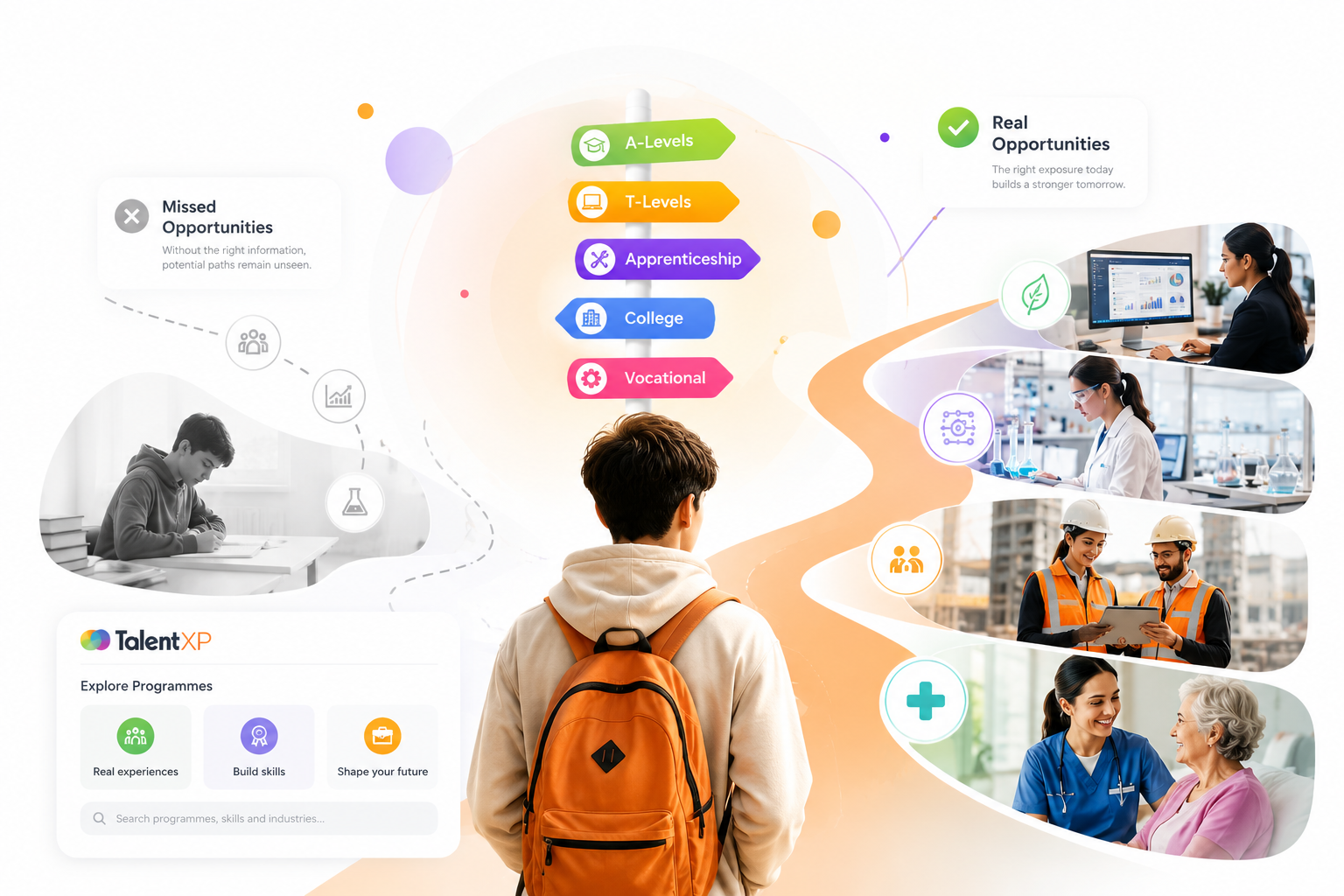
Schools Engagement puts the employer in front of young people before subject choices are made. Pathfinder, our careers quiz, helps candidates identify which apprenticeship routes match their interests and working style before they enter the process. Immersive Work Experience gives potential apprentices a genuine encounter with the work itself. Not a brochure. A structured experience that helps candidates understand whether engineering is for them, and that generates engagement data before a single application is submitted.

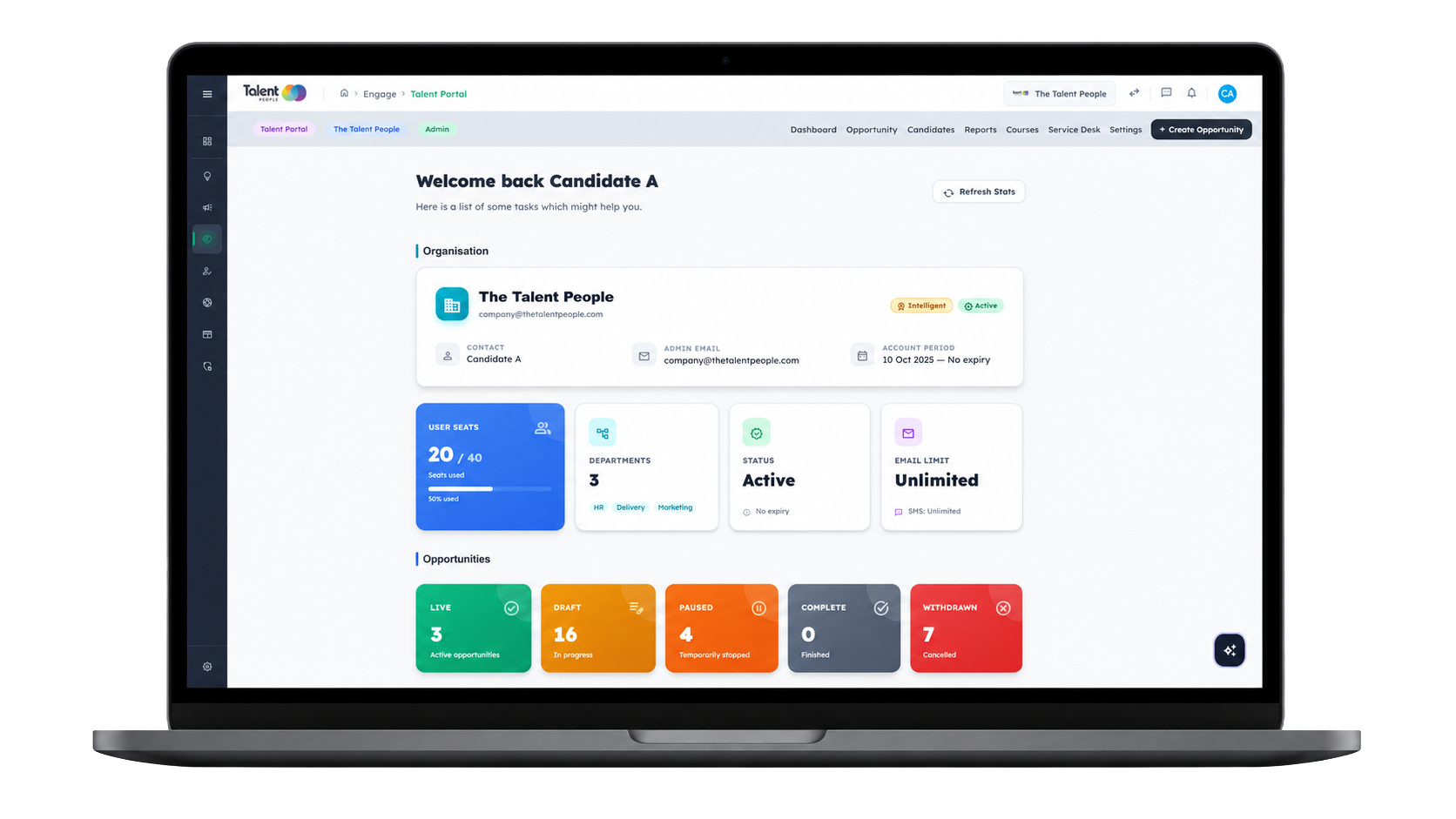
For filling vacancies now, the Talent Portal’s interest-led matching and location radius filtering finds motivated candidates in the right geography proactively. The apprenticeship eligibility logic handles the compliance layer automatically: age thresholds, funding tiers, prior attainment rules. Recruiters spend time on the conversations that matter, not the ones that can be automated.

Schneider Electric

ISE Award Finalist 2025, Outstanding Employer and Supplier Recruitment Partnership. The programme is designed to reach candidates from backgrounds not traditionally represented in engineering. Quantifiable social impact data, reportable against ESG and SMEI frameworks.

Common questions

Why is engineering apprenticeship completion so low in the UK?

Completion rates in engineering apprenticeships have been falling for several years, with the sector now sitting below 50% overall. In specialist trades such as Engineering Maintenance, completion rates are as low as 34%. Contributing factors include the complexity and duration of programmes (some run to 42 months), lack of mentoring from experienced engineers who are moving into management, and poor self-selection at entry: candidates who did not understand the role before starting are more likely to leave before finishing. Addressing self-selection at the start of the process, rather than managing dropout within it, produces the most durable improvement.

How do I attract young people into engineering when they have no idea what we do?

The employer brand challenge in engineering is primarily an exposure problem, not a marketing one. Young people cannot aspire to a career they have never encountered. The IET’s 2025 Skills Survey found that 45% of engineering employers believe the education system does not adequately prepare young people for real engineering roles. The most effective interventions start before GCSE subject choices are made, typically age 13 to 14, and use structured work experience to show candidates what the work actually involves, rather than describing it. Schools Engagement and Immersive Work Experience exist to address this at scale.

What is the engineering skills gap in the UK?

Engineering faces the largest apprenticeship deficit of any UK sector. According to DART Tool Group analysis of DfE and ONS data published in November 2025, 145 engineering jobs are currently competing for every single apprenticeship place. The sector needs an estimated 203,000 engineers annually to meet demand. At the same time, 20% of the existing engineering workforce is expected to retire within five years. The gap is structural and widening.

How do I recruit engineering apprentices from underrepresented backgrounds?

Female starts in engineering and technology apprenticeships reached 20% in 2024/25, up 94% since 2018/19. Minority ethnic starts reached 16% in 2023/24, up from 8% in 2018/19. Progress is real but the workforce remains far from representative. The most effective route to improving diversity in engineering pipelines is removing the access barriers at the top of the funnel: building employer brand in schools that do not already feed into engineering employers, using structured work experience that does not require prior connections or a particular school type, and selecting on demonstrated behaviour rather than background. A candidate from a state school in a post-industrial town who completes Immersive Work Experience has generated exactly the same quality of evidence as one who attended a grammar school with an existing employer partnership.

Talk to us about building your engineering and manufacturing talent pipeline.

Get in touch