





The energy transition is creating more skilled roles than the existing talent pipeline can fill.
The window to build that pipeline is now. Not when net zero targets start to bite.
Workforce retiring in 5yr
Vacancies to fill across energy and utilities by 2030
Clean energy workers needed by 2030 (nearly double the current workforce)
The challenge
The UK’s utilities and energy sector is undergoing structural transformation at a pace the existing workforce cannot match.
The Energy and Utility Skills Partnership’s Workforce Demand Estimates for 2024 to 2030 found that the sector needs to fill 277,000 vacancies by 2030 (equivalent to 50% of the entire current workforce). The UK Government’s Clean Energy Jobs Plan sets an ambition of more than 900,000 clean energy jobs by 2030, with over 400,000 new positions to be created. Approximately a third of the current energy sector workforce is over 50. Around 20% are expected to retire within five years. The pipeline that would replace them does not yet exist at the required scale.
The investment picture makes this more urgent, not less. The water industry alone is expected to invest around £100 billion in network spending in the 2025 to 2030 period, double the previous five years. National Grid has committed £35 billion in transmission infrastructure between 2026 and 2031. These investment levels are creating demand for skilled roles faster than any existing recruitment pipeline can supply.
The roles most urgently needed (grid engineers, network operators, smart metering technicians, offshore wind technicians, hydrogen engineers) are roles most young people have never encountered and cannot picture. Unlike law, medicine or finance, there is no cultural shorthand for what a career in utilities or energy involves. Women account for just 16% of the traditional energy sector workforce, despite making up 39% of the global labour force. The hiring pool is both shrinking and narrow.
The geographic dimension adds complexity that national employers do not face. Utilities and energy employers frequently operate in specific regions (the North West, East Anglia, the South East) where the candidate market is constrained by location. The best candidates in those markets need to be found and engaged proactively, before they commit to other sectors.
Our approach
The Talent People has worked with Severn Trent and other utilities and energy employers on the core challenge this sector presents: building a pipeline for roles that most young people have never heard of, in geographies where employer brand awareness is low and competitor employers are active.
Schools Engagement with data-driven school targeting based on social mobility indicators and geographic criteria builds the pipeline years in advance. It is particularly effective in the regions where utilities and energy employers operate most heavily and where employer brand awareness among young people is lowest.
Pathfinder, our careers quiz, maps candidates’ interests and working preferences to specific roles and programmes. For a sector with significant occupational breadth (from grid engineer to water network operator to smart meter technician), giving candidates a structured way to identify where they fit is often the critical first step before any work experience or application journey begins.
Immersive Work Experience provides the encounter that converts abstract interest into a genuine application. For roles that most young people cannot picture, structured immersive work experience is often the only thing that bridges the gap between knowing the employer name and understanding what the work actually involves. Pre-boarding and onboarding configurations on the same platform keep new hires engaged and informed between offer acceptance and start date, reducing the dropout that costs time and budget.
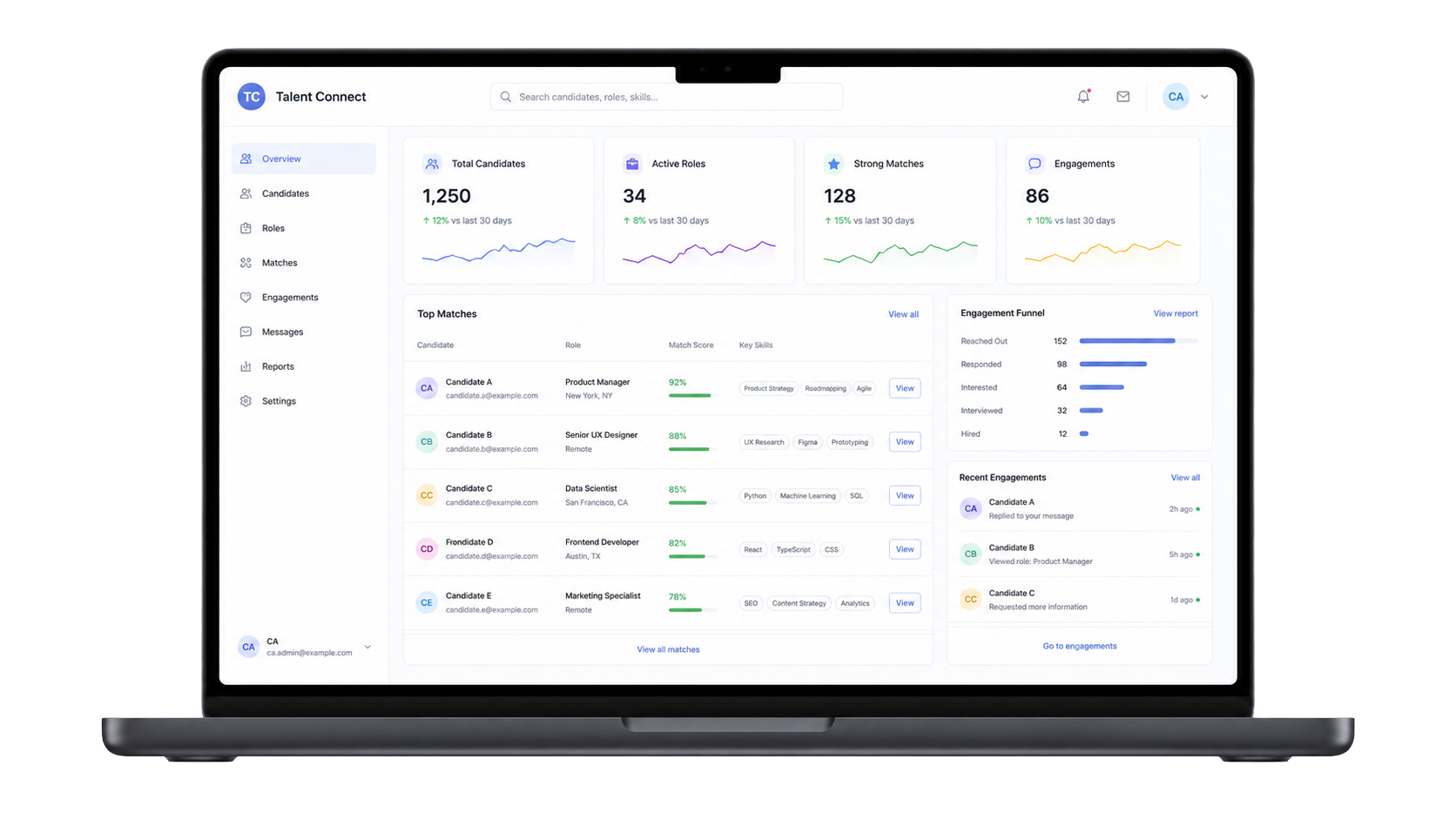
The Talent Portal’s interest-led matching and location radius filtering finds motivated candidates in the right geography proactively, before they have found a competing vacancy. Talent Connect manages engagement across the longer recruitment timelines that apprenticeship and programme hiring in this sector typically involves.
Common questions
How many jobs will the energy transition create in the UK?
The UK Government’s Clean Energy Jobs Plan, supported by analysis from Energy & Utility Skills, sets an ambition of more than 900,000 clean energy jobs by 2030. Of these, over 400,000 will be new positions. The Clean Energy workforce would nearly double in size in less than a decade. The roles span offshore wind, grid infrastructure, solar, storage, hydrogen and the electrification of heat and transport. Many of the most in-demand roles (grid engineers, network planners, offshore installation technicians) require several years of structured development before a new entrant is fully operational. Employers who start building those pipelines now are positioned to meet 2030 targets. Those who wait for the labour market to supply qualified candidates will face material delivery risk.
Why is it hard to recruit engineers and technicians in the water sector?
The water sector faces a combination of challenges shared with engineering broadly and some specific to the sector. The workforce is ageing: around a third of employees in energy and utilities are over 50. Specialist technical roles have low public visibility. Most young people do not know what a water network operator does, let alone aspire to it. Geographic constraints are significant: water companies operate in fixed service regions, which limits the candidate market in ways that national employers do not face. And investment levels are increasing rapidly: £100 billion in water network spending is projected for 2025 to 2030, doubling the previous period and creating demand at a pace the existing pipeline cannot match.
How do I recruit apprentices for utilities roles when young people don’t know what we do?
The answer is exposure before application. Young people cannot apply to a career they cannot picture. The most effective route is structured work experience (Immersive Work Experience) that shows candidates the actual work and generates genuine interest before the application queue opens. Pathfinder, our careers quiz, maps candidate interests and working preferences to specific roles in your portfolio, providing a structured starting point for young people who are interested in engineering, environmental or technical careers but do not yet know which direction to go. Combined with Schools Engagement that reaches young people before GCSE subject choices are made, this creates a pipeline built on genuine informed interest rather than speculative application.
What is the energy skills shortage going to cost the UK if it is not addressed?
PwC research has estimated a green skills gap of around 200,000 workers in the UK energy sector. Without action, this shortage would constrain renewable energy generation and delay the infrastructure projects underpinning net zero delivery. The government’s own Clean Power 2030 Action Plan acknowledges that workforce shortages in offshore wind, onshore grid infrastructure and nuclear are among the most significant near-term risks to delivery timelines. The commercial consequences for individual employers who cannot fill critical technical roles include delayed capital projects, contractor cost inflation and operational risk in regulated assets. Energy & Utility Skills’ sector engagement with government has placed workforce development at the centre of the Clean Energy Skills Strategy 2025 to 2030.