Strengths-based question design
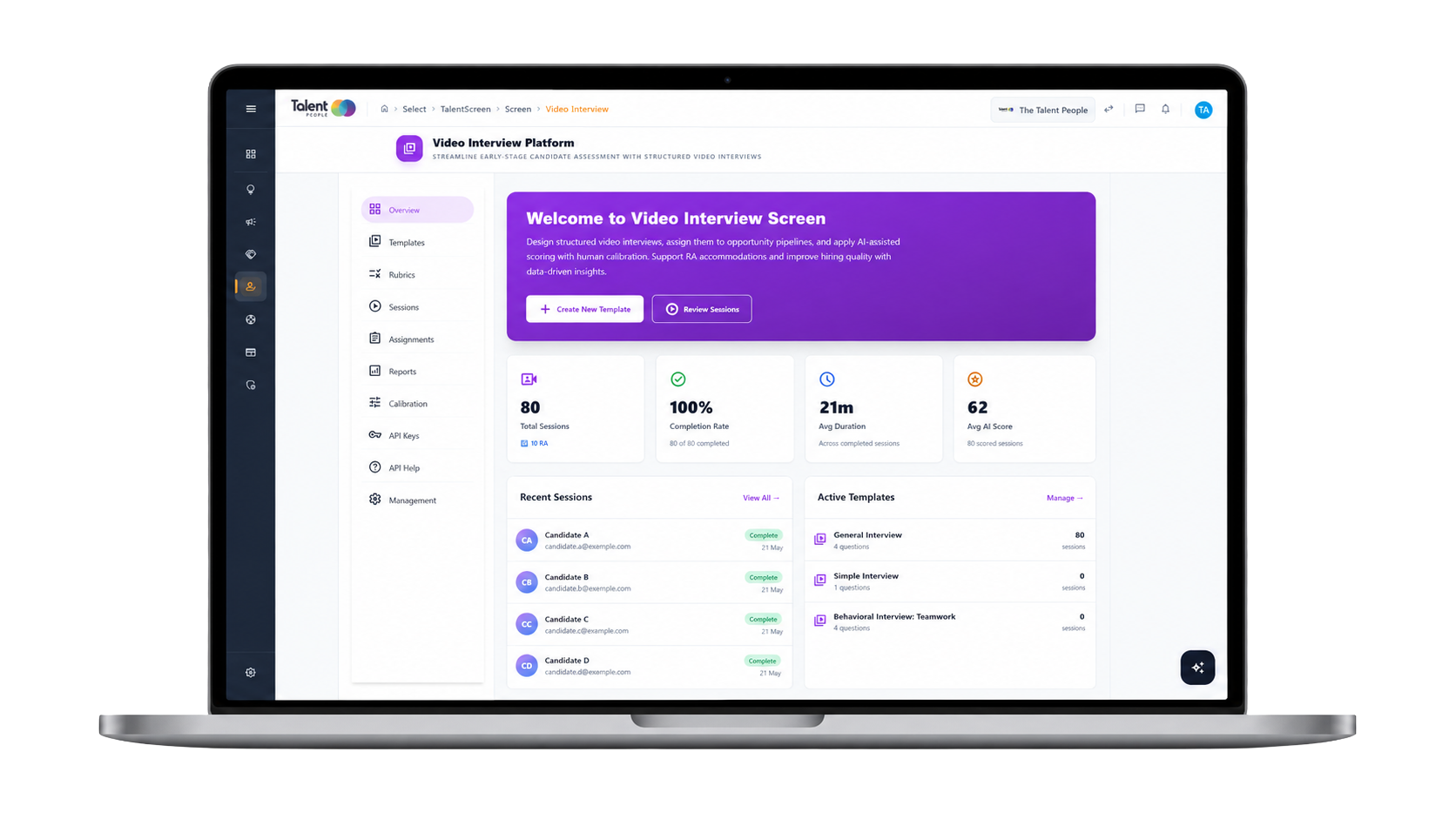
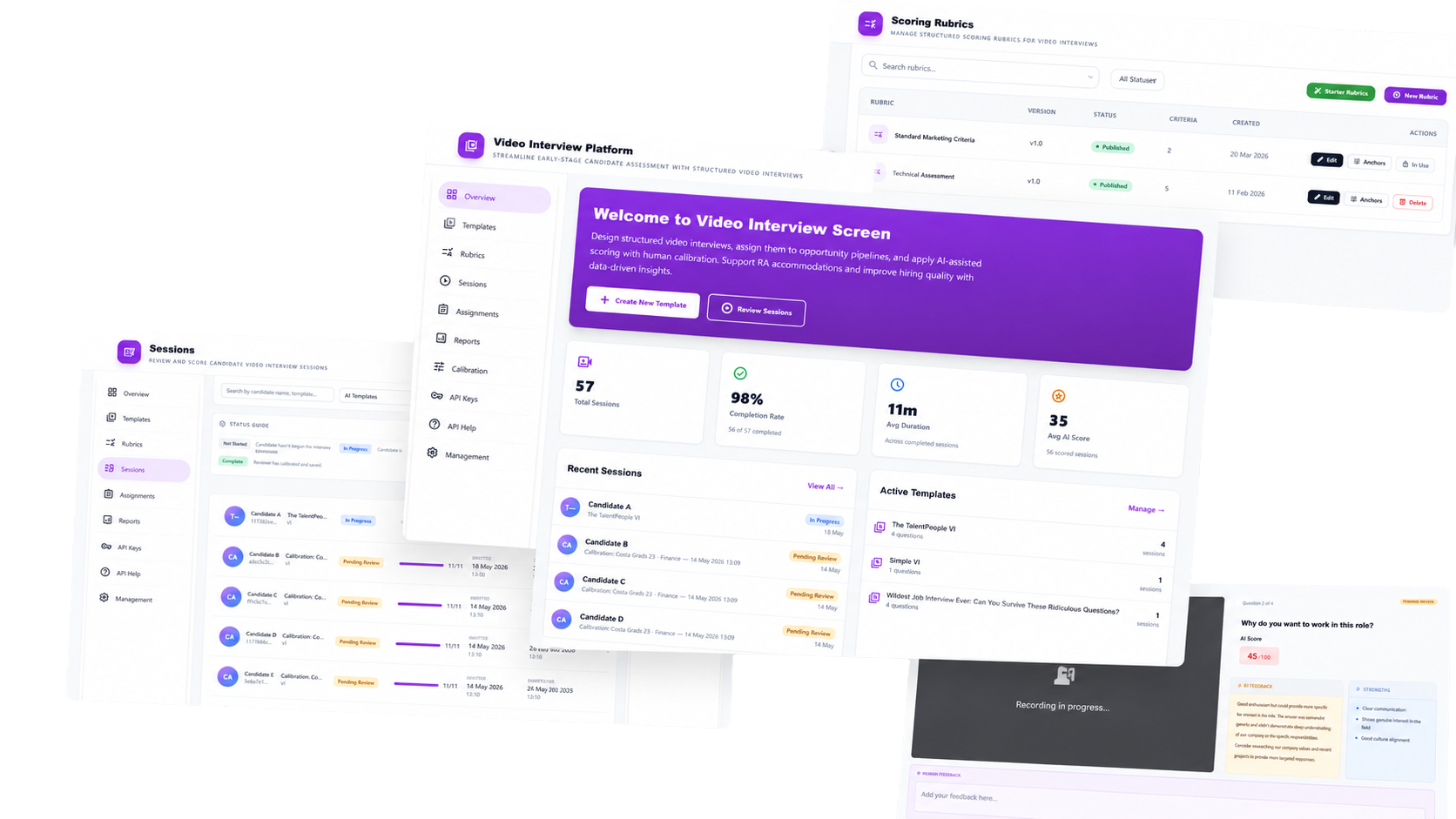
We work with employers to design structured video interview questions built around the specific strengths the role requires. Role-specific rubrics set before any candidate completes.
A video interview is only as good as the questions. Generic questions produce generic answers.
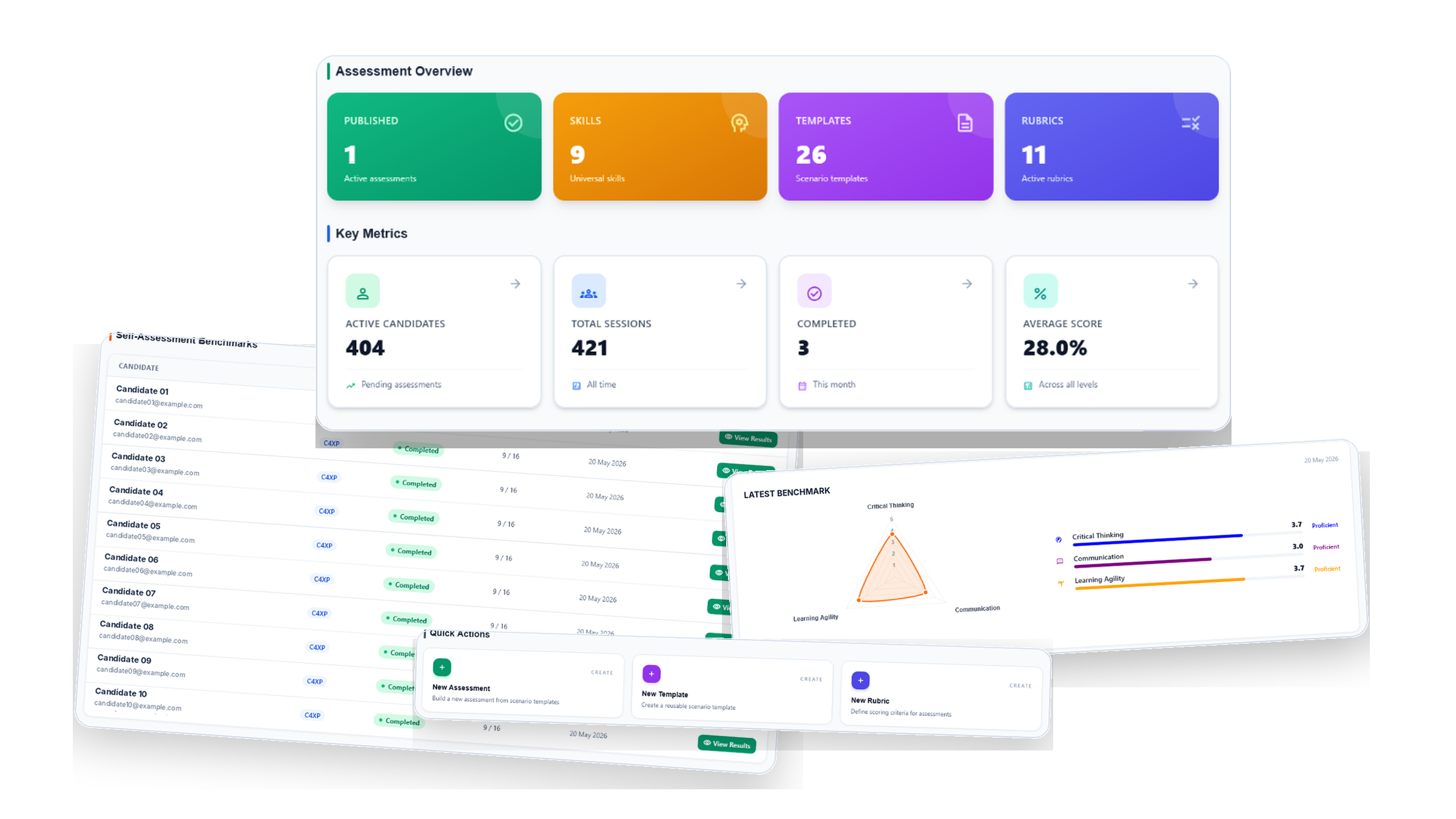
Individual calibration model
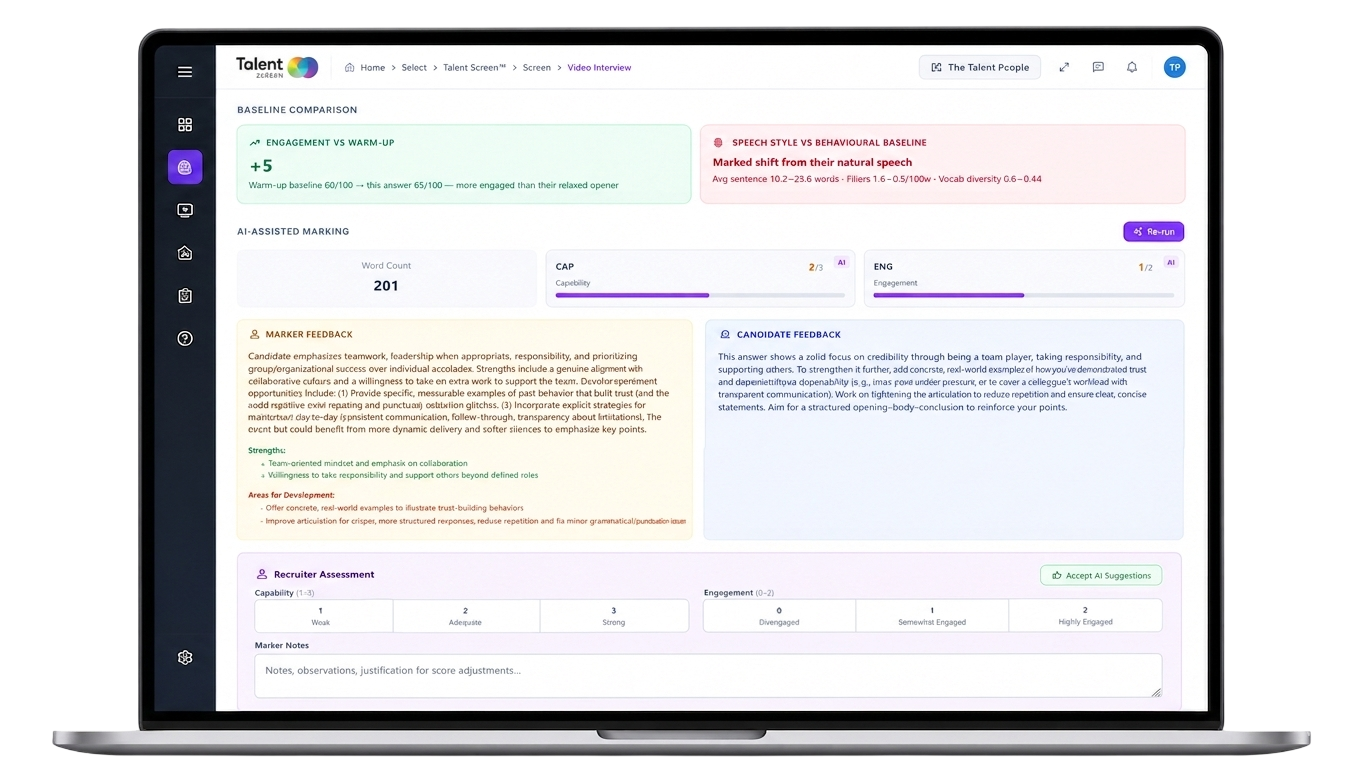
Every candidate answers an open question about their interests outside work before substantive questions begin. This establishes their personal communication baseline. Substantive responses are then scored against that individual baseline, not a population norm.
A candidate who communicates differently from a hypothetical average is not flagged. Preparation cannot game a baseline the candidate themselves established.
Authenticity Score
Composite indicator comparing substantive responses against the candidate’s own baseline. Assesses pace deviation, tonal consistency, language naturalness and answer structure. Advisory input to recruiter judgement, not a replacement for it.
Surfaces genuine engagement rather than practised performance. Candidates from different backgrounds are not penalised.
Live bias monitoring
Real-time dashboard tracking scoring patterns across the review team. Statistical anomalies flagged before they become decisions.
Bias is caught before it compounds. The audit trail meets ICO and DSIT requirements.
AI-generated transcripts and structured scoring
Every response transcribed automatically. Reviewers score against the role-specific rubric. Full audit trail.
Consistency across reviewers, geographies and volume. Every decision is documentable.
Native suite integration
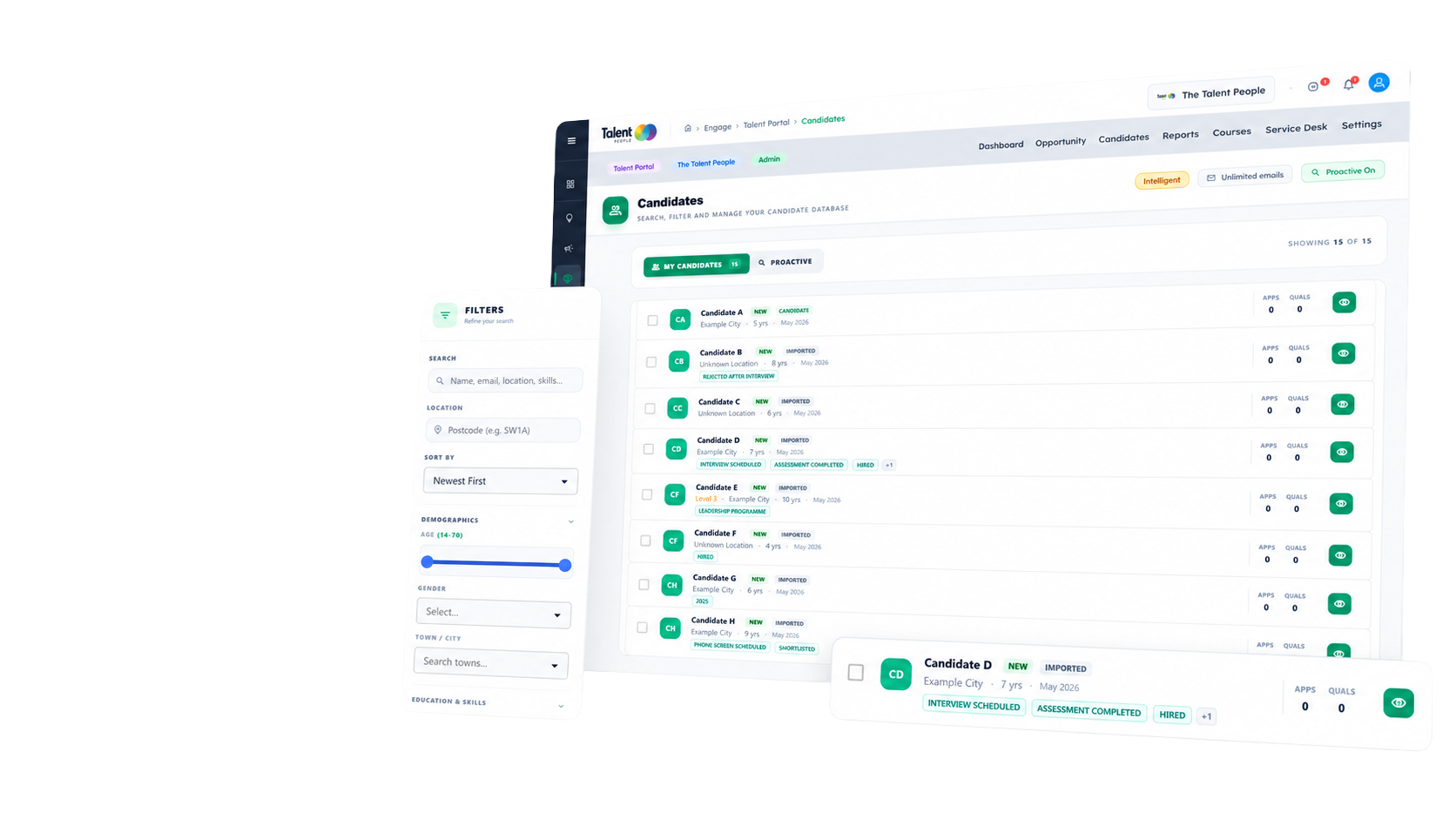
Immersive Work Experience engagement data and Talent Portal records visible in the reviewer interface. Interview scores and transcripts feed forward to Talent Assess.
Interviewers make decisions with the full candidate picture, not just the video in front of them.