




The public sector has some of the most structured early talent programmes in the UK.
It also has some of the most demanding procurement requirements for the tools that support them. We meet every one.
All three certified
Framework listed
Data handling throughout
The challenge
Public sector early talent recruitment operates within a framework that most commercial platforms were not designed for.
Civil Service Success Profiles set competency requirements that must be evidenced at every stage of selection. BPSS security vetting requirements affect how candidate data is handled and stored throughout the process. The Procurement Act 2023 strengthened social value obligations: suppliers to the public sector must now demonstrate substantive, independently evidenced social impact. This is a scored criterion in procurement, not a box to tick. A supplier that cannot produce verified SROI data will lose ground to one that can.
The ICO’s 2024 audit of AI recruitment tools found that some commercially available systems were filtering candidates on protected characteristics without employer knowledge. For public sector organisations (which carry the highest reputational and legal exposure from discriminatory outcomes) this is not an abstract risk. Any AI-assisted selection tool deployed in public sector recruitment must produce complete, explainable audit trails for every individual decision. Most currently available tools cannot.
The pipeline challenge is also real, and competitive. The Civil Service Career Launch Apprenticeship opened applications in August 2025: a new route for school leavers into government administration, funded through the Growth and Skills Levy. The Civil Service Fast Stream ranks consistently as the UK’s number one graduate employer. The NHS, local authorities and emergency services run parallel early talent programmes. Every public sector body is competing for a finite pool of motivated candidates at broadly the same time of year, through broadly similar channels. The organisations that build genuine brand recognition and role understanding among young people before they enter the market will have the pipeline that others are still trying to create.
Our approach
The Talent People is listed on G-Cloud 14 and is procurement-ready for public sector buyers. The platform is built to meet the requirements that matter in this market: Social Value Act evidencing, BPSS-aligned data handling, and complete ICO-compliant audit trails for every AI-assisted selection decision.
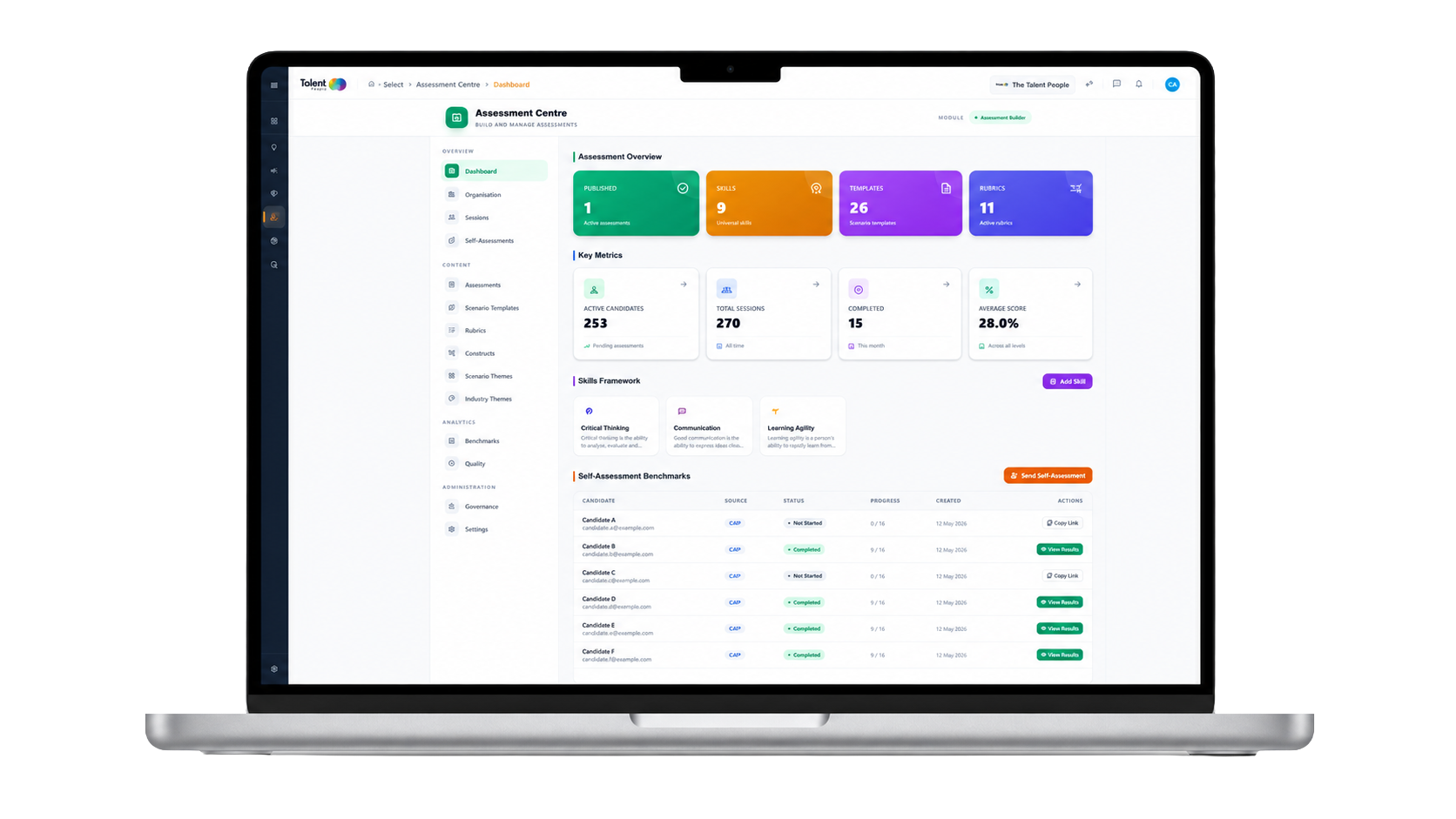
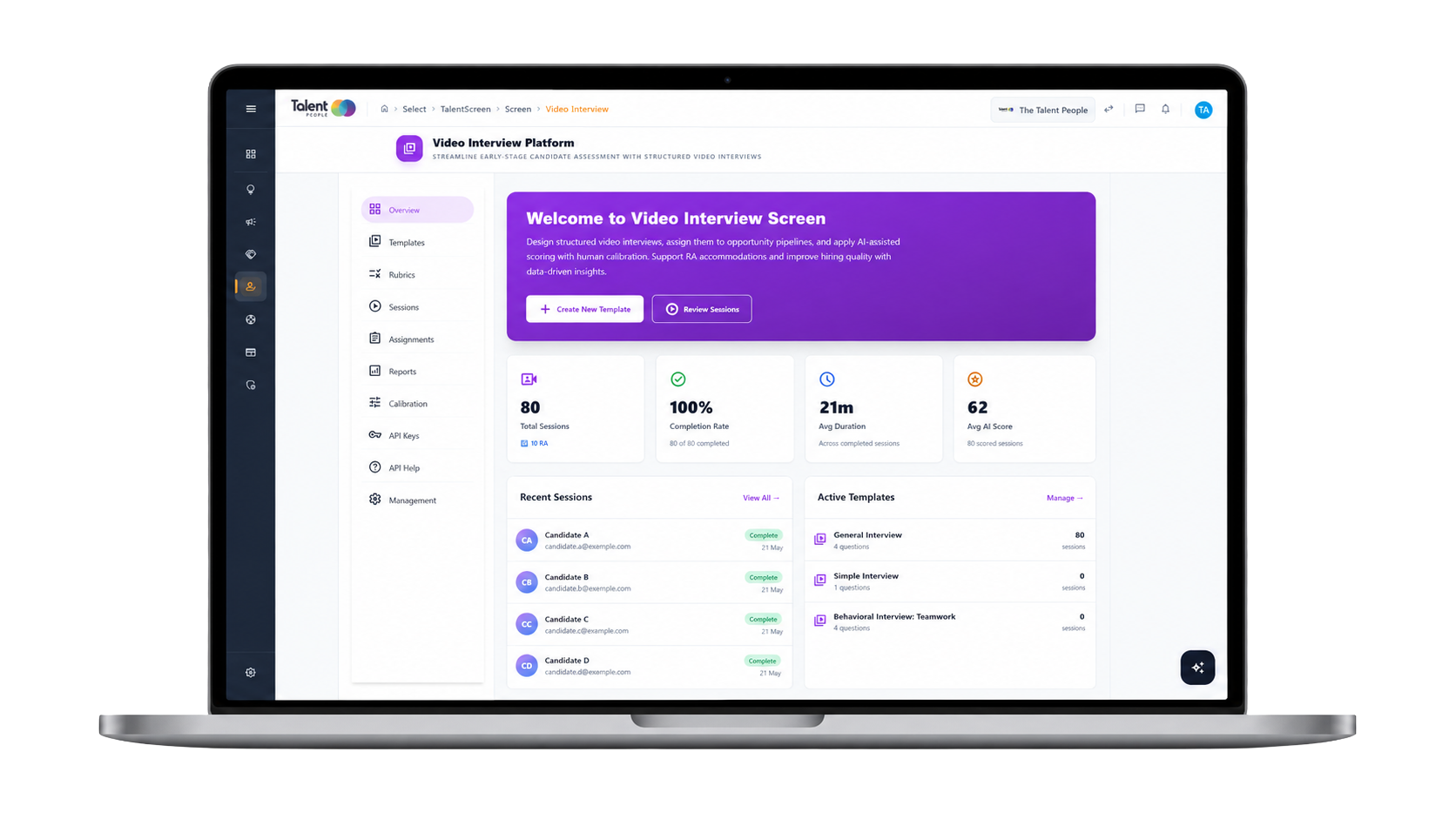
The Video Interview Platform’s individual calibration model, live bias monitoring and full documentation of every scoring decision provides the evidential basis that public sector selection processes require. Talent Assess produces adverse impact reporting across social mobility indicators, disability, ethnicity and gender. That is the data public sector employers need for board reporting, regulatory compliance and Procurement Act submissions.
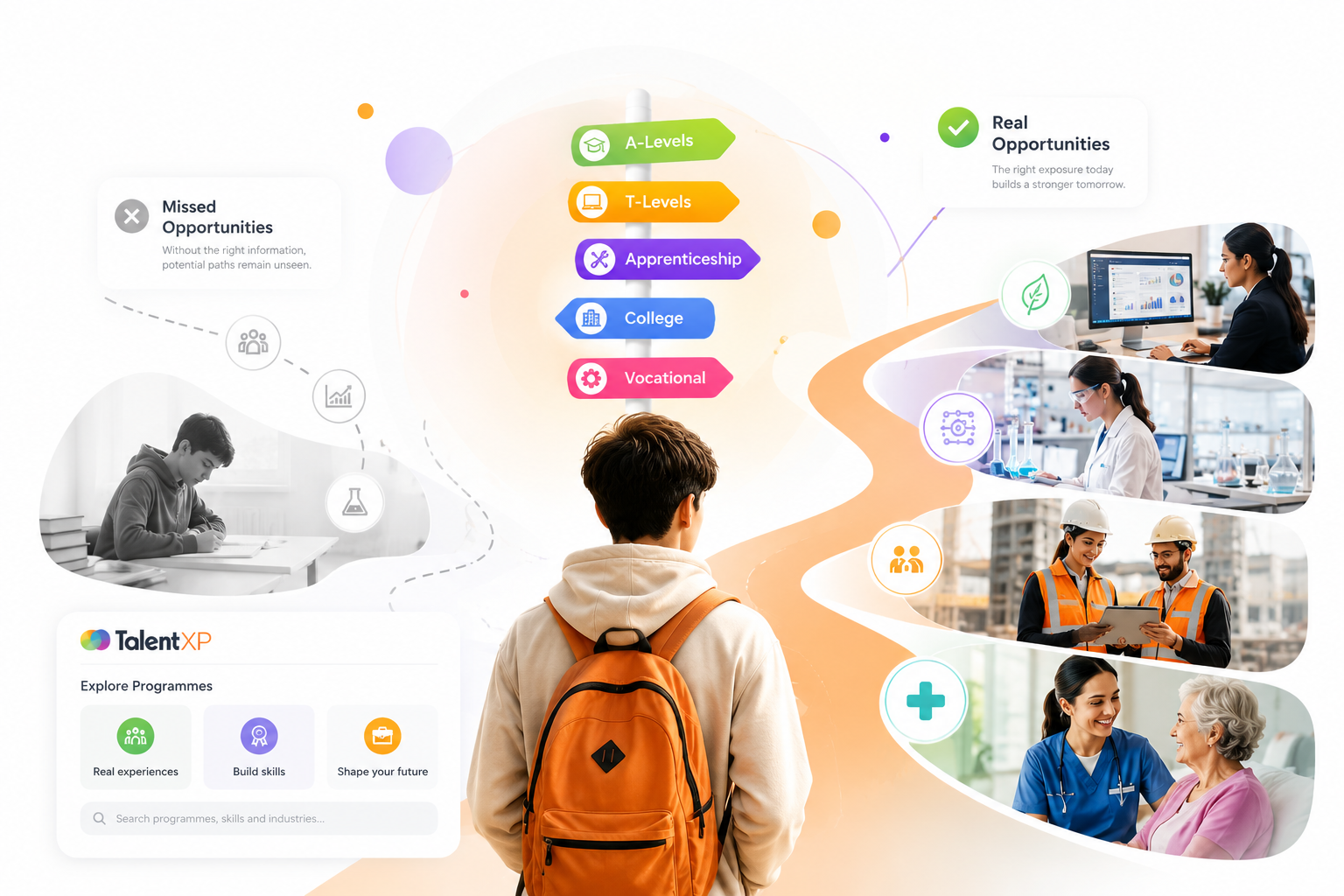
Schools Engagement with data-driven school targeting against Free School Meal rates and geographic deprivation indices produces the social mobility evidence required for Social Value Act submissions and SMEI reporting. The social impact data is independently verified and attributable to specific programme activity.
The Talent People is a certified social enterprise, backed by Nesta. Partnering with a registered social enterprise generates independently verified social value that is directly reportable against Social Value Act criteria and usable in procurement submissions.
G-Cloud 14 listed. Procurement Act 2023 ready. Civil Service Success Profiles supported. BPSS-aligned data handling. ISO 27001, ISO 9001 and Cyber Essentials Plus certified. Independently verified SROI on every programme.
Common questions
Is The Talent People listed on G-Cloud?
Yes. The Talent People is listed on G-Cloud 14, the current iteration of the Crown Commercial Service framework. Public sector organisations can procure directly through the framework without running a separate tender process. The listing covers the full platform suite. Contact us with your specific requirements and we can confirm which framework lot applies to your procurement.
How do I meet Social Value Act requirements when procuring recruitment technology?
The Social Value Act requires public sector organisations to consider how procurement can improve economic, social and environmental wellbeing. In practice, for recruitment technology, this means being able to demonstrate that the supplier generates independently verifiable social impact, not just that it makes commitments. The Talent People is a certified social enterprise. Every programme generates SROI data using the seven principles of the Social Return on Investment methodology, independently verified. This data is reportable against Social Value Act criteria and directly usable in procurement and grant applications.
What does ICO AI audit guidance mean for public sector recruitment technology?
The ICO’s 2024 audit of AI recruitment tools found that some commercially available systems were producing discriminatory outputs (filtering candidates on protected characteristics) without the employer’s knowledge. For public sector organisations, this creates both regulatory and reputational risk. DSIT’s Responsible AI in Recruitment Guidance requires live bias monitoring, algorithmic impact assessments and documented individual audit trails for any AI-assisted selection tool. Any platform procured for public sector recruitment must be able to demonstrate compliance with these requirements, not just assert it.
How do public sector early careers programmes compete with the private sector for candidates?
The public sector has structural advantages (job security, purpose-driven work, competitive pension provision, flexible working) that some candidates weight heavily. The challenge is visibility, not proposition. Most young people do not have a concrete picture of what a civil service, NHS or local authority career involves at an operational level. The organisations that address this earliest (building genuine employer brand in schools, offering structured work experience that shows young people the reality of public sector careers) establish an advantage in a market where most public sector employers are still waiting for candidates to find them rather than proactively building a pipeline.