Schools Engagement
By the time a young person sees your job advert, they have already decided which careers feel possible and which employers feel like they are for people like them.
Schools Engagement is how you get into that conversation early enough to matter.
The challenge
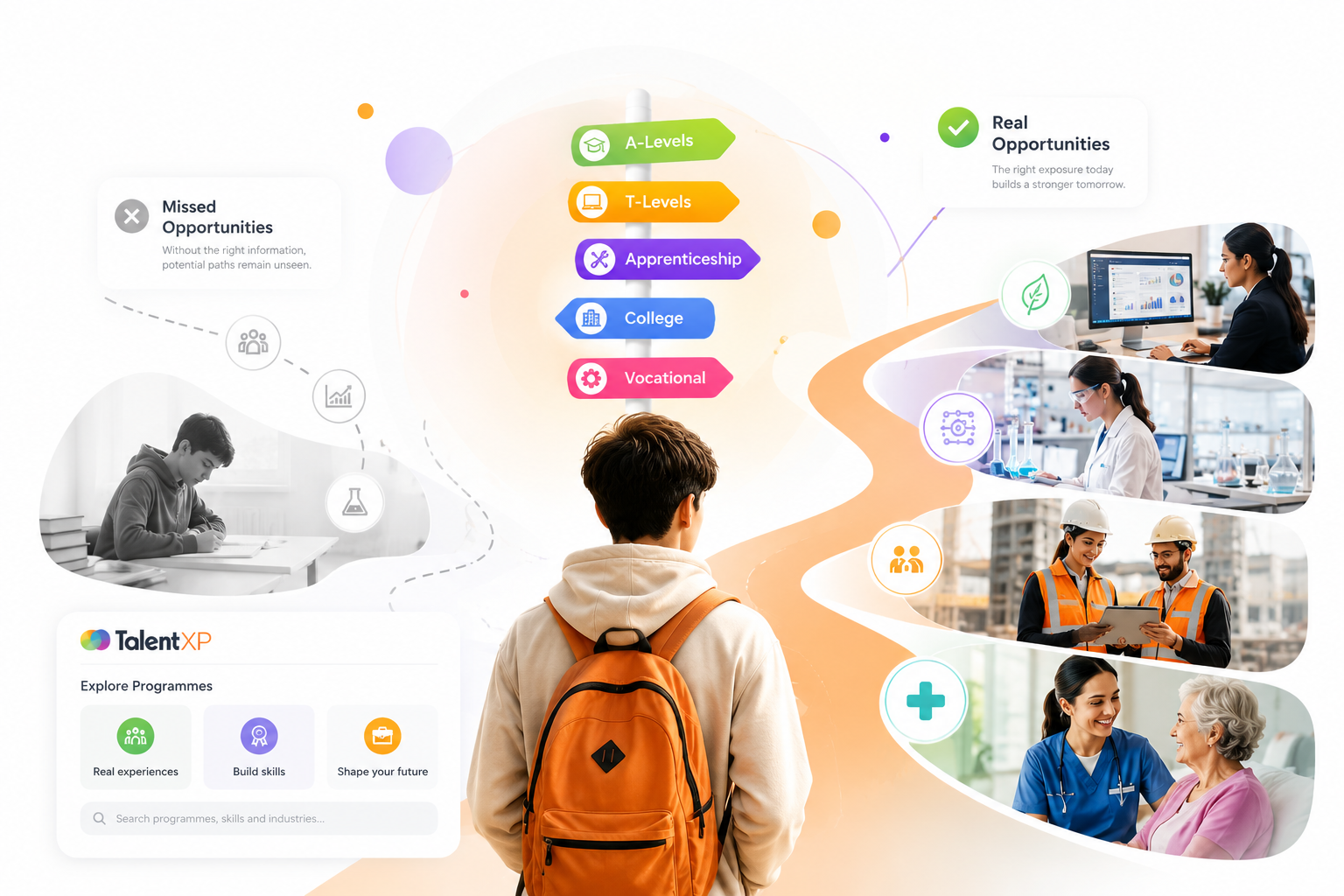
Career preferences form early. By the time a young person is choosing qualifications (GCSEs, A levels, T levels, a college course) they have already made implicit decisions about which industries feel relevant to them and which do not. If your organisation is not part of that picture before those decisions are made, you will feel the consequences later.
Some employers feel it as volume without quality: applications arrive in bulk from candidates who understand the brand but not the work, or who applied speculatively because nothing in their experience ever gave them a more informed reason to choose. Others feel it differently. Hard-to-fill roles, regional gaps, specialist disciplines that never appear in a school assembly or a careers fair. The candidates who would thrive in those roles exist. Nobody told them the role did.
In both cases, the problem was not created at the point of recruitment. It was created years earlier, when the right young people were making decisions about their futures without the information they needed.
Our approach
Our Schools Engagement programmes put your organisation in front of young people at the moment their thinking is still forming. We identify the right schools using data on social mobility indicators, geography and free school meal rates. We develop content built entirely around your brand and the real range of roles within it. We deliver it, leave curriculum-embedded materials with teachers, and give you evidence of reach and impact you can report against.
The result is not a one-off assembly. It is a brand impression that compounds. Schools Engagement works as a standalone programme. For organisations using:
The young person inspired at 13 can find you again at 16 or 17 without the trail going cold.
Outcomes
- Brand awareness among young people who are still deciding what careers feel possible for them, built before subject and qualification choices are fixed.
- A more informed, more motivated pipeline at the point of recruitment, because candidates who have already encountered you arrive with genuine context.
- Quantifiable social impact data: pupils reached, schools engaged by social mobility indicators, geographic spread, Gatsby Benchmark 5 evidence. Reportable against SMEI and ESG frameworks.
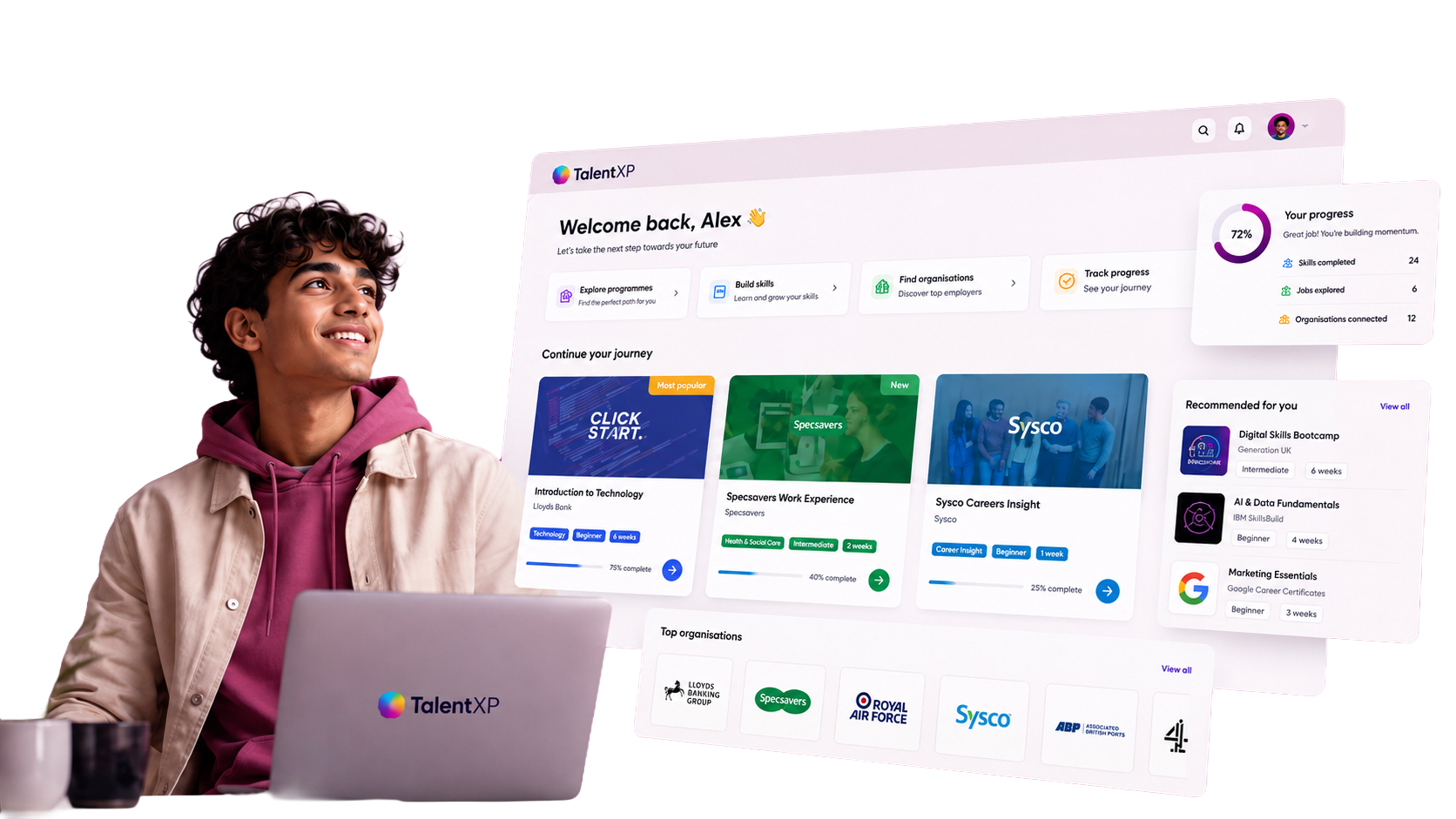
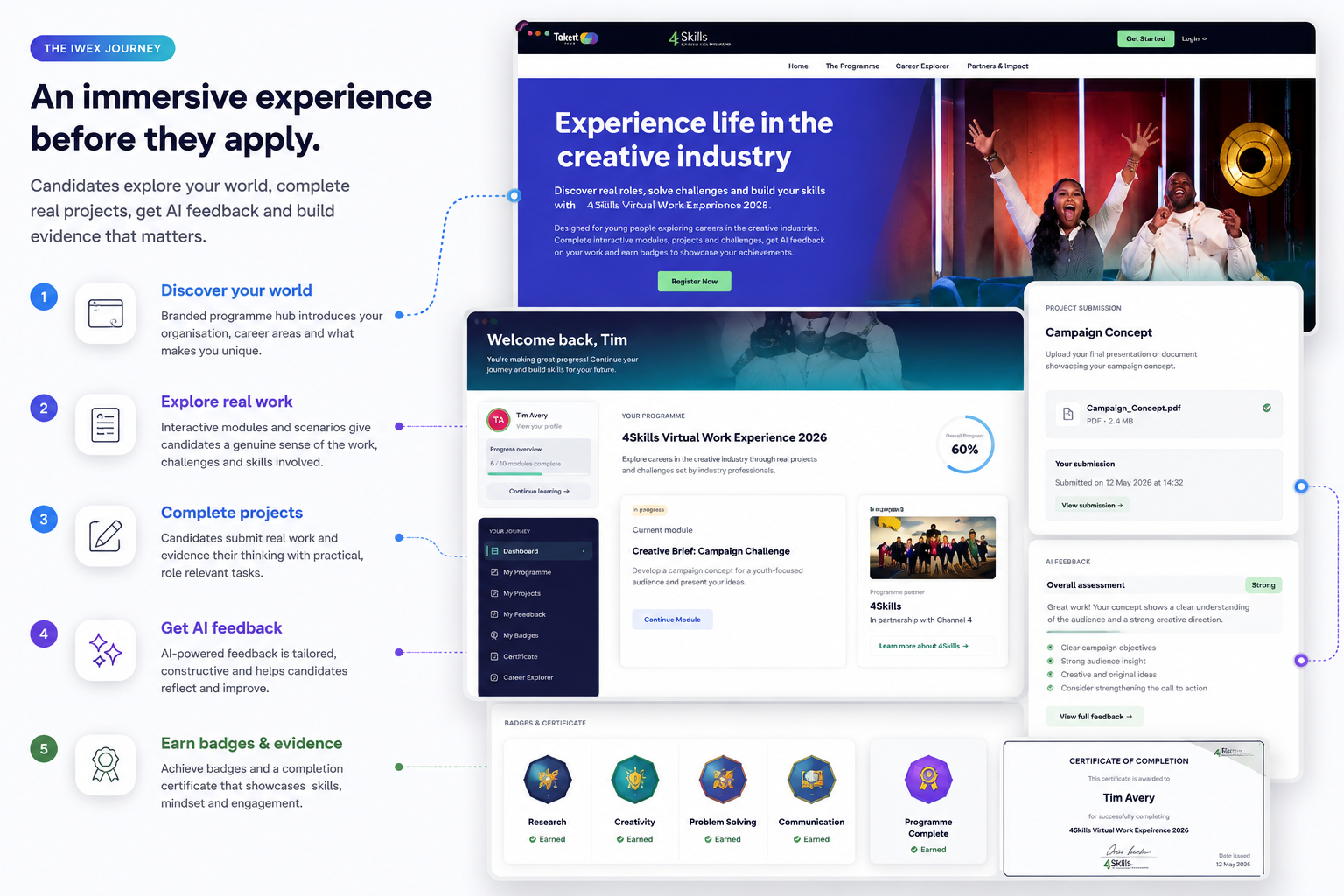
- For organisations using Immersive Work Experience or Talent Portal, a direct connection so the young person inspired at school can find you again when they are ready to apply, without the trail going cold.
Proof point
Channel 4’s 4Skills programme reached over 12,000 KS3 pupils across the West Midlands, West Yorkshire and the North East. Every school was selected for above-average free school meal rates. The programme is referenced as part of Channel 4’s public value commitments under its Ofcom licence. For a broadcaster whose consumer brand is well-known but whose occupational breadth is invisible to most young people, it addressed both problems at once: expanding who sees Channel 4 as a potential employer, and evidencing social impact at a regulatory level.
For employers in less visible sectors (precision engineering, food manufacturing, logistics technology) the same model applies. The brief changes. The architecture does not.
Built for the new Gatsby standard
The updated Gatsby Benchmarks, mandatory for all secondary schools from September 2025, require employer encounters to involve preparation, active two-way participation and post-visit reflection. A one-off speaker visit no longer qualifies. Our programmes are designed to meet the new standard from the ground up: structured sessions, teacher resource packs, and post-programme impact data your school can use as evidence.