




Professional services has done more than almost any other sector to open up early talent recruitment.
The pressure to go further, and to evidence it, has never been higher.
Better performance for businesses that prioritise social mobility
Firms in the 2024 SMEI now measuring their class pay gap
Employers entered the Social Mobility Employer Index in 2024
The challenge
The major firms have removed degree classification requirements, expanded access programmes and signed the Social Mobility Employer Index. The commitments are real. So is the gap between commitment and evidenced outcome.
The Social Mobility Employer Index had 150 entrants in 2024. Legal, financial and professional services firms make up the highest concentration of any sector. Twenty-six entrants now measure their class pay gap: a significant increase on previous years. The Index has evolved from a voluntary benchmark into an expectation. Firms not entering are increasingly asked why. Firms entering are increasingly asked what they can prove.
Application volumes are high. Graduate and intern programmes are structured and well-resourced. The problem sits in selection. Specifically: whether the processes doing the shortlisting are measuring what they claim to measure. Psychometric tests are coachable. Test preparation resources are commercially available and disproportionately accessed by candidates from higher-income households. Assessment centre performance correlates with confidence built through prior exposure to formal environments. Video interview scoring is inconsistent across reviewers and difficult to defend under EHRC scrutiny.
Accenture research published alongside the Social Mobility Employer Index found that businesses which prioritise social mobility perform 1.4 times better than their competitors. The commercial case is no longer a secondary argument. Organisations that can point to selection processes which produce diverse, high-quality shortlists, and document how every decision was made, will outperform those that cannot.
Our approach
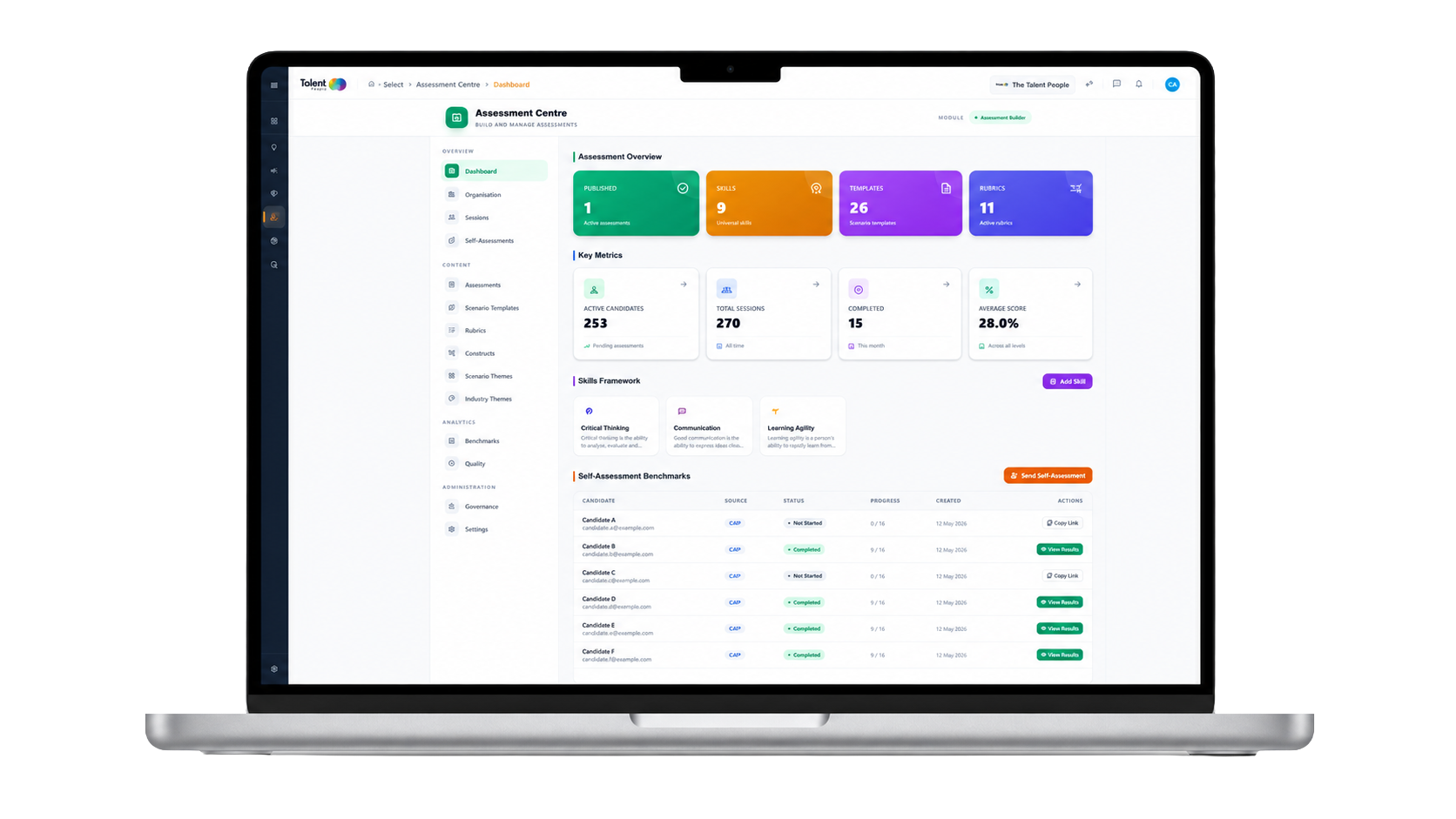
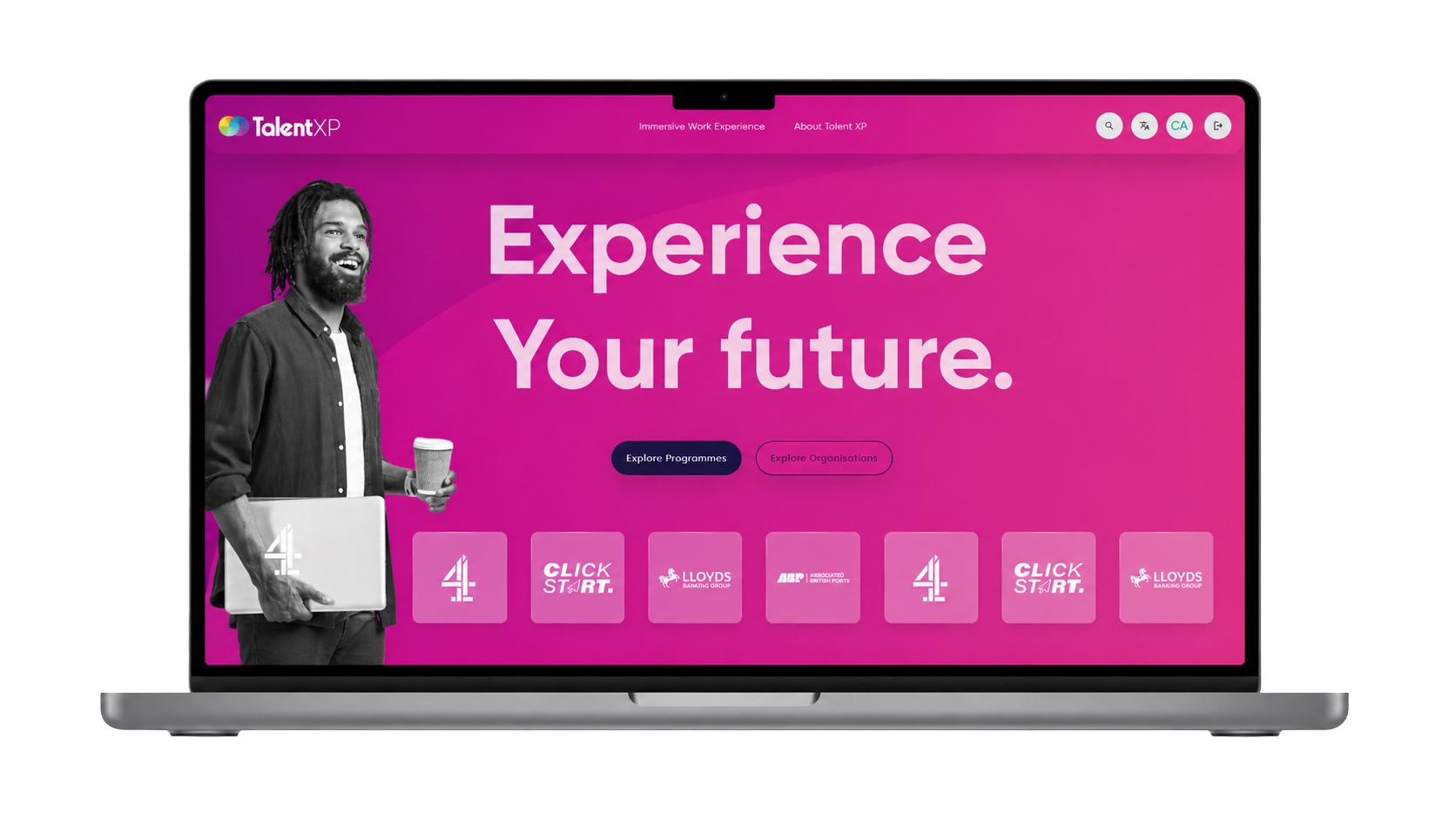
Immersive Work Experience gives candidates a genuine encounter with the firm before they apply. Candidates arrive better informed and with engagement data that precedes their application. Talent Assess converts that engagement into ranked evidence of motivation and capability, assessed against a fixed rubric defined before any candidate completes: no comparative ranking, no training on historical hire data.
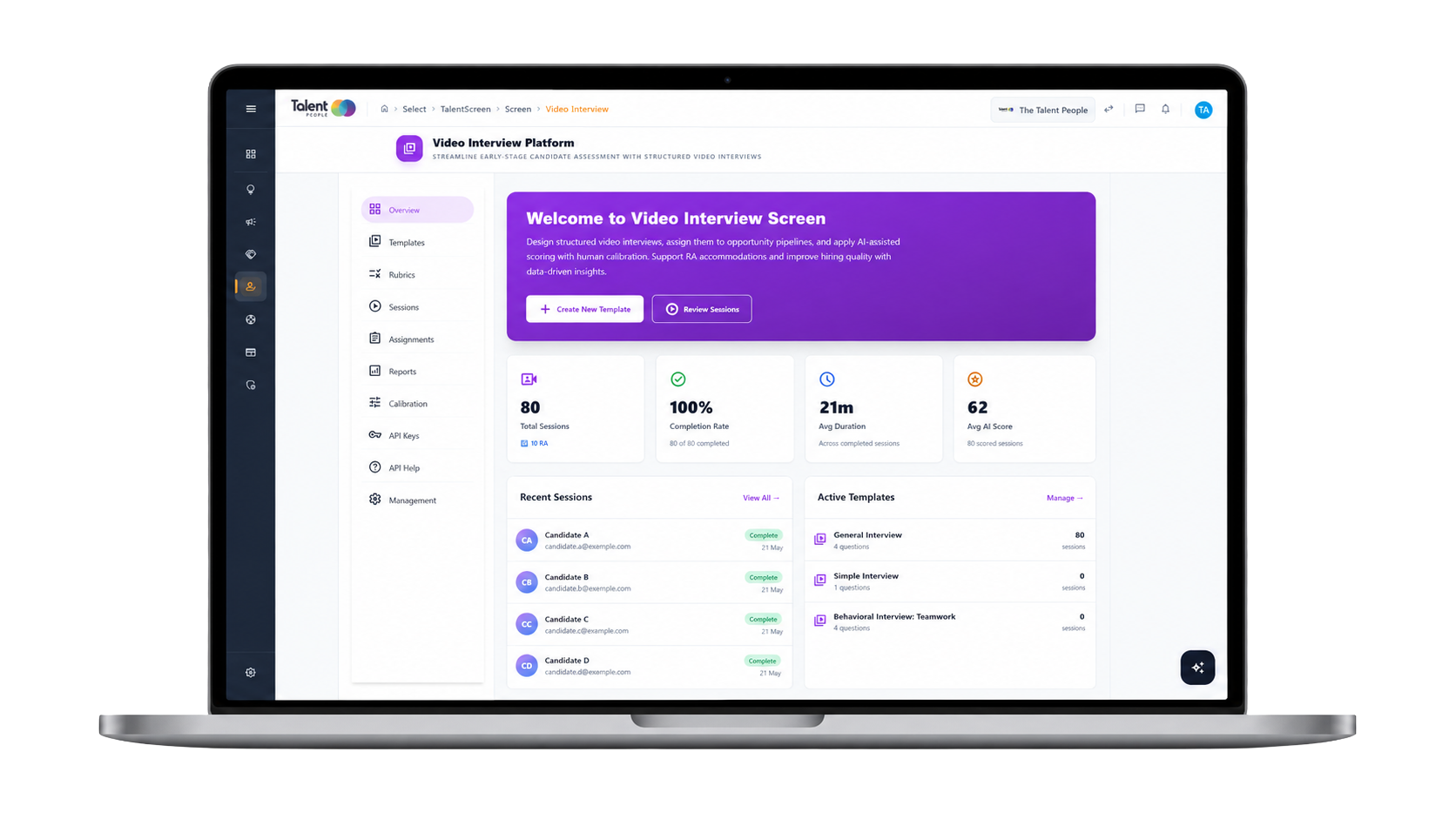
The Video Interview Platform adds individual calibration: every candidate is scored against their own natural communication baseline, not a population norm. Live bias monitoring tracks scoring patterns across the review team in real time. Every decision is documented. If the process is ever challenged, the evidence is there.
Relevant products
Common questions
What does the EHRC say about fairness in early careers recruitment?
The EHRC’s Employment Statutory Code of Practice sets out the legal obligations on employers under the Equality Act 2010. For selection processes, the relevant principle is objective justification: any selection criterion must be genuinely related to the requirements of the role and applied consistently. Employers cannot rely on historical practice as a defence. If a selection tool produces adverse impact, for example if candidates from particular ethnic backgrounds or socioeconomic groups consistently score lower, the employer must be able to demonstrate that the tool is measuring something genuinely predictive of job performance. Selection processes that cannot produce a documented audit trail for every decision create EHRC exposure, particularly as enforcement activity in early careers hiring has increased.
How do I reduce coaching bias in professional services selection?
Coaching bias enters selection at two primary points: psychometric testing (where test preparation confers an advantage) and assessment centres (where familiarity with formal evaluation environments confers an advantage). Both correlate with socioeconomic background. Reducing it requires changing what you measure at the top of the funnel rather than trying to correct for it downstream. Immersive Work Experience generates evidence of motivation and engagement through structured work-based tasks completed over time, without a formal interview setting. Talent Assess converts that engagement into ranked selection evidence against a fixed rubric. Neither can be coached in the way that psychometrics or assessment centres can, because both measure consistent behavioural patterns rather than performance on a single day.
What is the Social Mobility Employer Index and how does entering it benefit us?
The Social Mobility Employer Index, run by the Social Mobility Foundation, is the UK’s primary benchmark for employer-led social mobility. Employers answer questions and provide data across seven areas covering recruitment, progression, workplace culture and supplier relationships. In 2024, 150 employers entered. The Index provides independent benchmarking, sector comparison and a structured framework for identifying where practice needs to improve. For professional services firms, the Index also carries reputational weight with graduates: candidates from lower socioeconomic backgrounds actively look for Index participation as a signal that their application will be assessed fairly.
How do we defend our selection decisions if a candidate raises a discrimination claim?
The starting point is documentation. Every scoring decision (who scored what, against which criteria, at which stage) needs to be recorded and retrievable. If the process used any AI-assisted tools, you need to be able to demonstrate what the tool was scoring, how individual decisions were made, and that the tool’s outputs were subject to human oversight. The Video Interview Platform documents every scoring decision, every rubric applied, and every bias monitoring alert generated during the review process. If a decision is challenged, the complete record is there. Most early careers selection processes currently operating in professional services cannot produce this evidence on demand.