Three-quarters of UK technology employers are struggling to fill roles.
The skills they need most (AI, data, cybersecurity) are exactly the skills that take years to develop and cannot be hired fast enough to meet current demand.
Can't fill roles
IT hardest to source
UK adults lack essential digital skills for work
The challenge
IT and data skills have been the hardest to source in the UK for five consecutive years. In Q1 2025, 75% of technology employers reported difficulty filling roles while simultaneously planning to hire. The gap is structural. Educational pipelines produce graduates faster than the market can absorb in some areas, while the specific competencies employers need most (AI and automation, cloud architecture, cybersecurity engineering) remain chronically undersupplied. A 2024 government review found that 7.5 million UK adults, 18% of the working-age population, lack the essential digital skills needed for the workplace. A further 23.4 million people (approximately 60% of the workforce) cannot complete all 20 digital tasks that government and industry have defined as essential for employment. These are not niche gaps. They are a structural deficit that no employer can hire their way out of alone.
For early talent specifically, the challenge is twofold. AI-assisted applications have made it genuinely difficult to distinguish candidates who have strong AI literacy from those who used AI tools to produce a convincing submission. The skills that matter most (AI fluency, learning agility, the ability to adapt quickly to new tools) are the hardest to assess from a written application and the most commercially critical to get right. Meanwhile 71% of UK organisations report a persistent cybersecurity skills shortage, up from 57% the previous year. AI-related job postings are growing at more than three times the rate of the broader jobs market. The talent required is in acute short supply and being competed for by every sector simultaneously.
The government’s June 2025 announcement of a partnership with industry to train 7.5 million workers in essential AI skills by 2030 signals the scale of the structural investment required. The Level 4 AI and Automation Practitioner Apprenticeship, launched in March 2026, creates a funded route through the Growth and Skills Levy for employers who want to build that capability from entry level. Employers who build the early talent pipeline for these roles now will have a structural advantage within three years.

Our approach
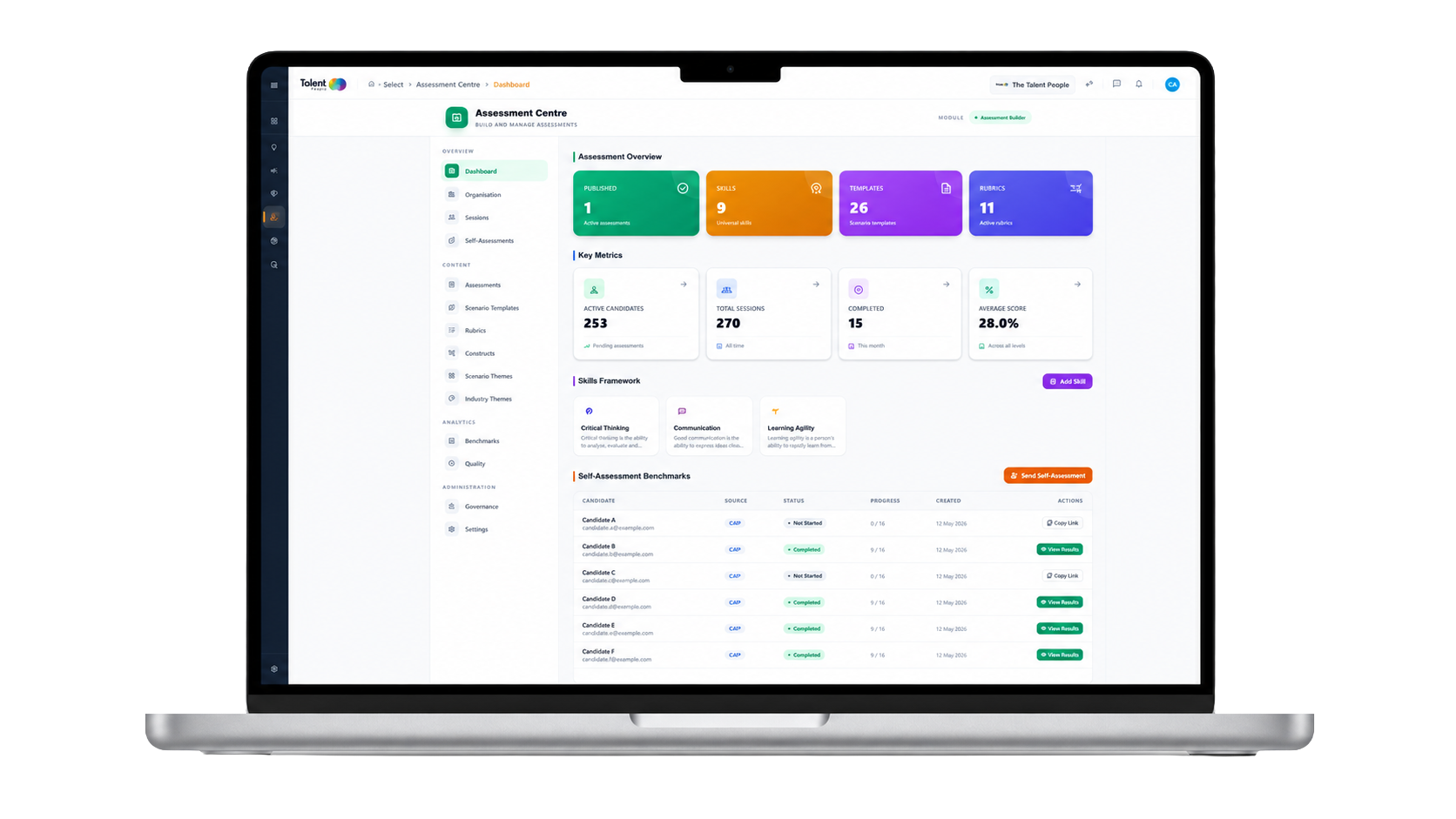
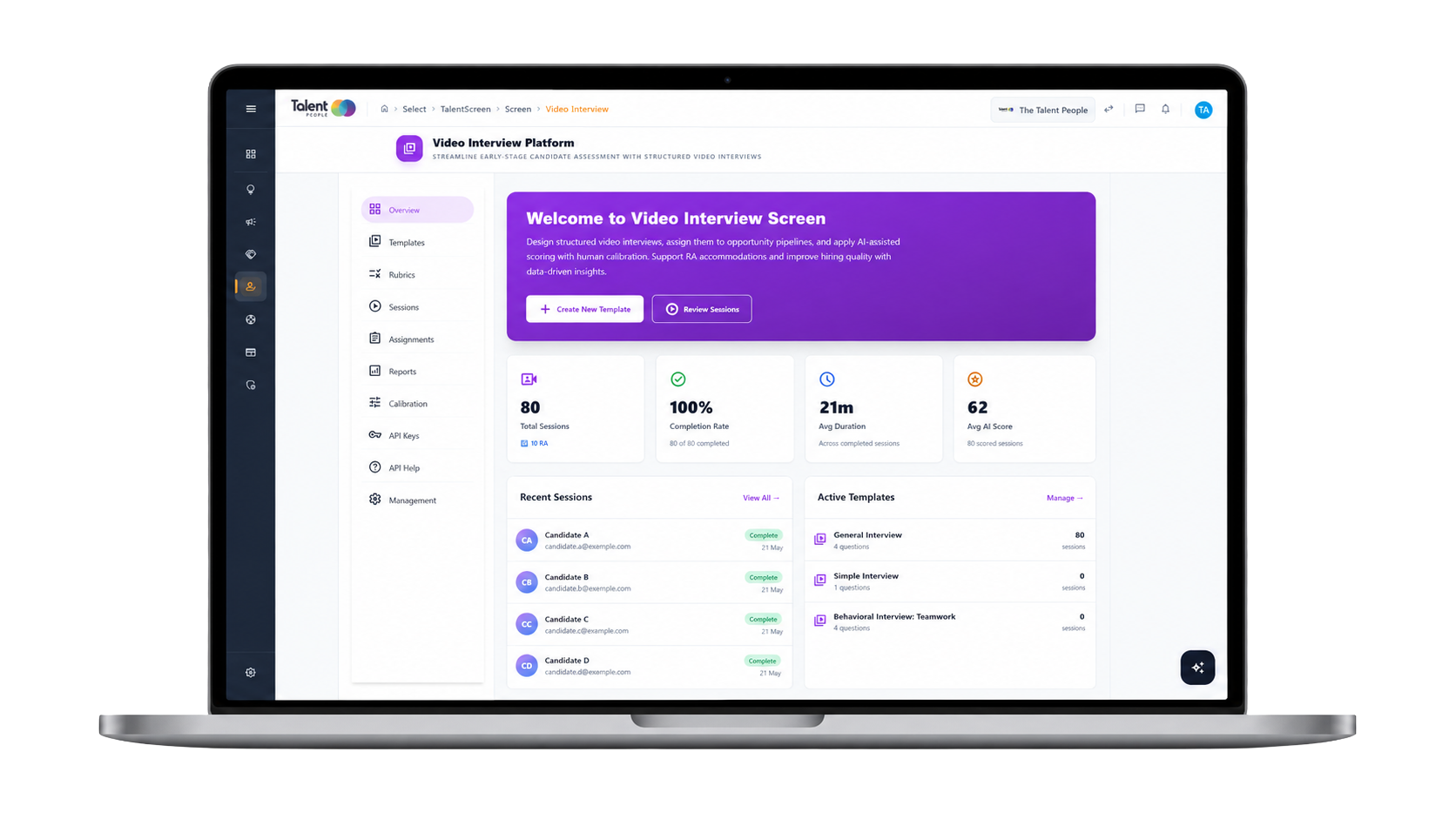
Talent Assess measures AI Skills as one of its four core competency dimensions. Candidates demonstrate how they actually use AI tools through real work tasks, not a knowledge test. The individual calibration model in the Video Interview Platform is particularly relevant here: it establishes each candidate’s natural communication baseline through a non-assessed warm-up question, then scores structured interview responses against that individual baseline rather than a population norm. The result is a reliable signal of authentic technical communication that is distinct from AI-polished presentation.
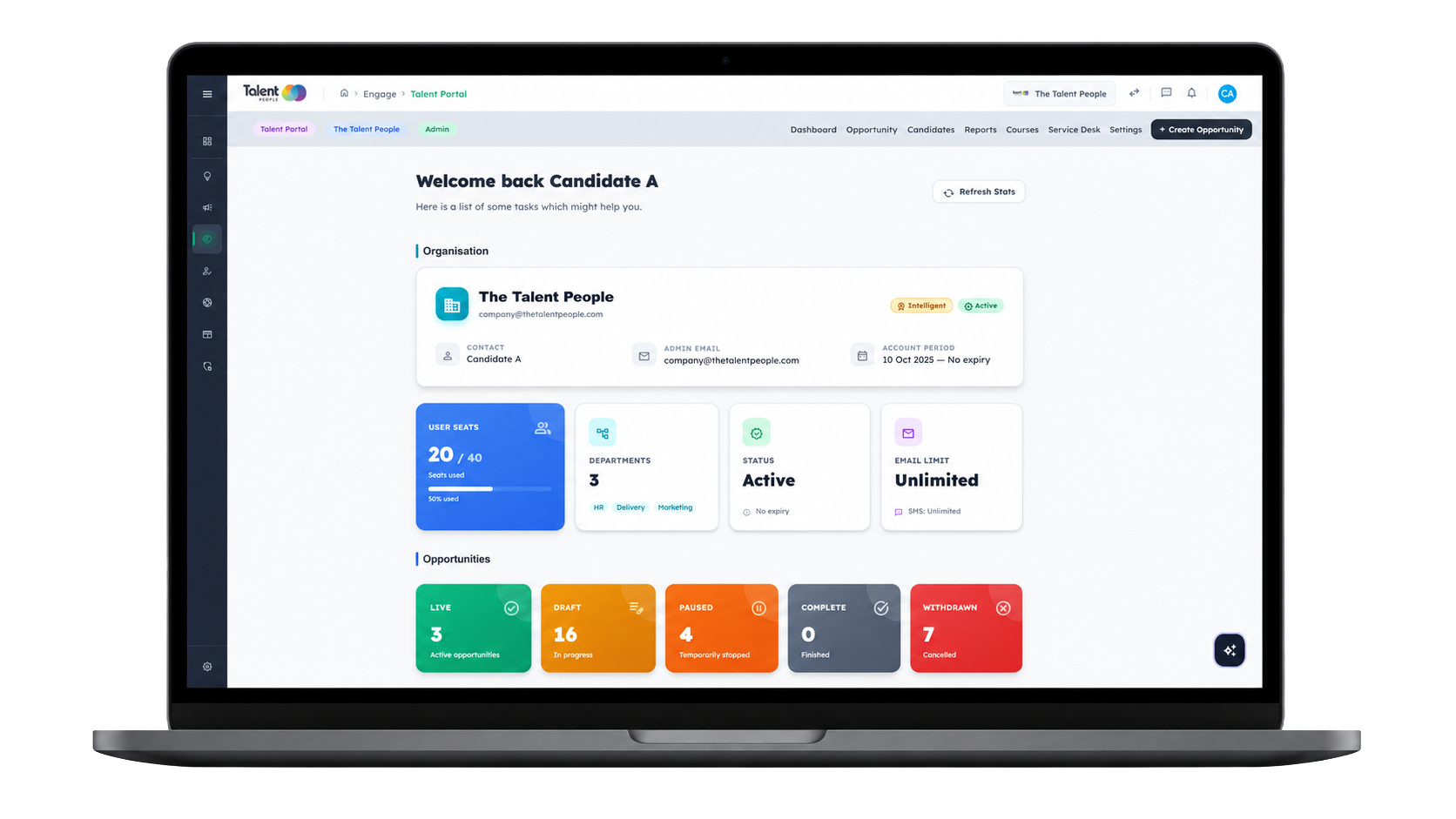
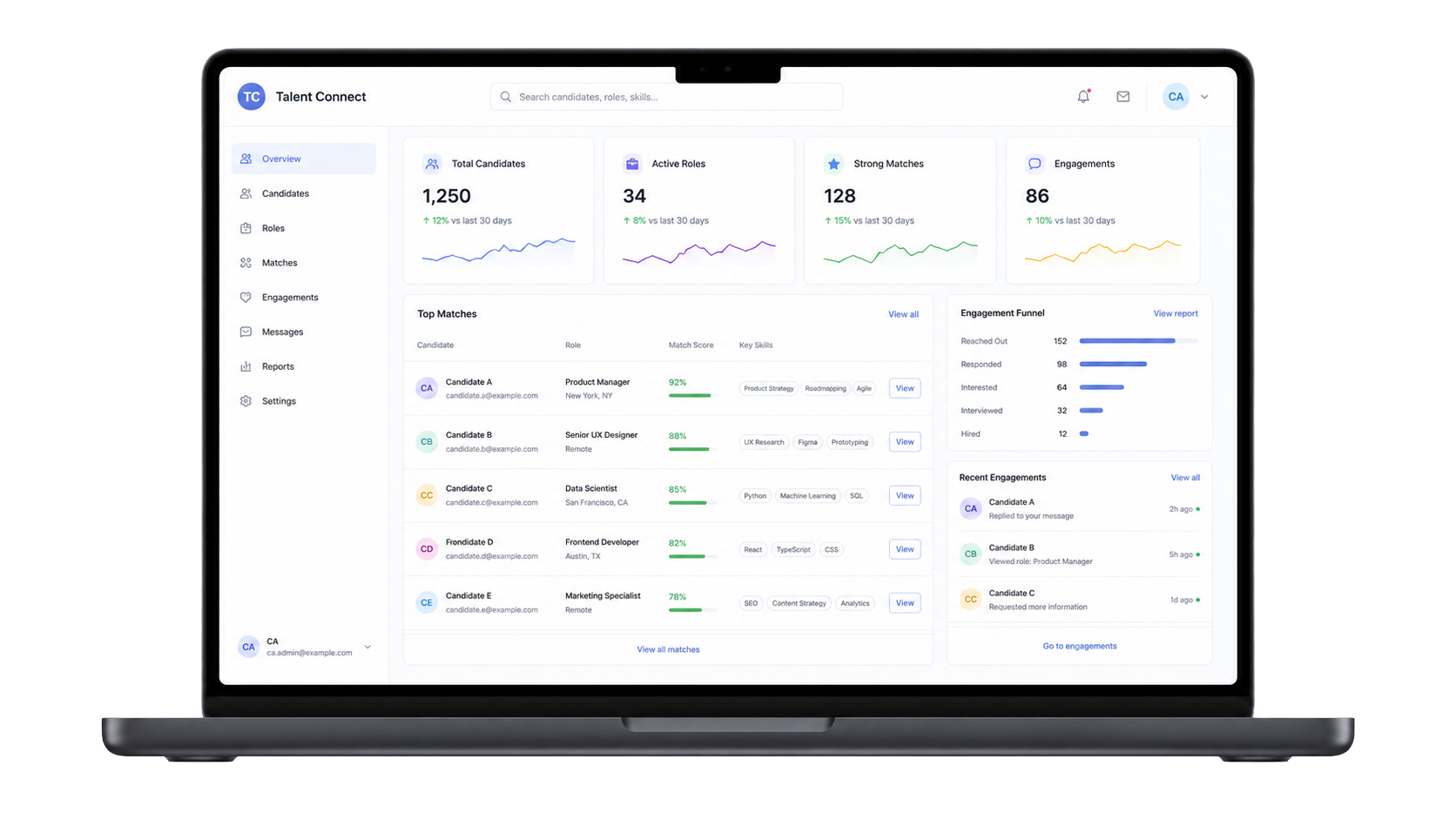
The Talent Portal supports the end-to-end recruitment process for technology apprenticeship cohorts, including the new Level 4 AI and Automation Practitioner standard. Interest-led matching identifies candidates who are genuinely drawn to technical roles rather than applying speculatively. Talent Connect manages engagement across what can be a longer recruitment cycle for specialist technical programmes, with automated nudges, in-flight analytics and multi-channel communication.
Common questions
How do I assess AI skills in early talent candidates?
The challenge with assessing AI skills in early talent is that most entry-level candidates have used AI tools but few have used them in a structured, reflective way. What employers actually need is not proof of tool use. It is evidence of AI fluency: the ability to use AI purposefully, evaluate its outputs critically, and apply the results to real work. The most reliable way to assess this is through a structured task rather than a question-and-answer format. Candidates who have genuinely developed AI fluency will demonstrate it through how they approach a problem; those who have not will rely on AI to answer questions about AI, which produces a circular and unreliable result. Talent Assess measures AI fluency as a distinct competency dimension, assessed through task completion rather than self-report.
How do I tell if a candidate used AI to write their application?
The short answer is that you cannot tell reliably from the application itself. AI detection tools have high false positive rates, and more experienced candidates have learned to edit AI outputs to evade detection. The more useful question is why it matters: if the application is the primary evidence base, you are dependent on a document that may tell you nothing accurate about the candidate. The structural answer is to build evidence upstream of the application (through Immersive Work Experience, through structured work tasks via Talent Assess) so the application is corroborating a picture you have already built, not the only picture you have.
What are the hardest tech skills to recruit in the UK right now?
According to the Manpower Experis 2025 Talent Shortage Survey, IT and data skills have been the hardest to source in the UK for five consecutive years, a position unchanged since 2020. Within that, AI and machine learning engineers, data analysts and scientists, and cybersecurity engineers are the most sought-after roles with the lowest available supply. 71% of UK organisations reported a persistent cybersecurity skills shortage in 2024, up from 57% the previous year. AI-related job postings are growing at more than three times the average rate across all job categories.
What is the Level 4 AI and Automation Practitioner Apprenticeship?
The Level 4 AI and Automation Practitioner Apprenticeship was launched in March 2026. It is designed for employers who want to develop applied AI skills across their workforce at entry and junior level, rather than relying on graduate recruitment alone. The standard is fundable through the Growth and Skills Levy. It covers AI tool application, automation, data literacy and responsible AI use in the workplace. For technology employers with existing levy balances, it is a route to building a pipeline of AI-competent early talent that does not depend on the graduate hiring market.